What are the main differences between the Yang Style and Chen Style of Tai Chi?
Choosing the right path is crucial for anyone exploring Tai Chi for beginners. The differences between the Yang Style and Chen Style of Tai Chi are profound. They affect everything from posture correction and joint health to energetic cultivation. While both are powerful internal martial arts, they offer distinct experiences. Understanding these differences is the key to selecting the style that best suits your physical goals, personality, and approach to improve balance.
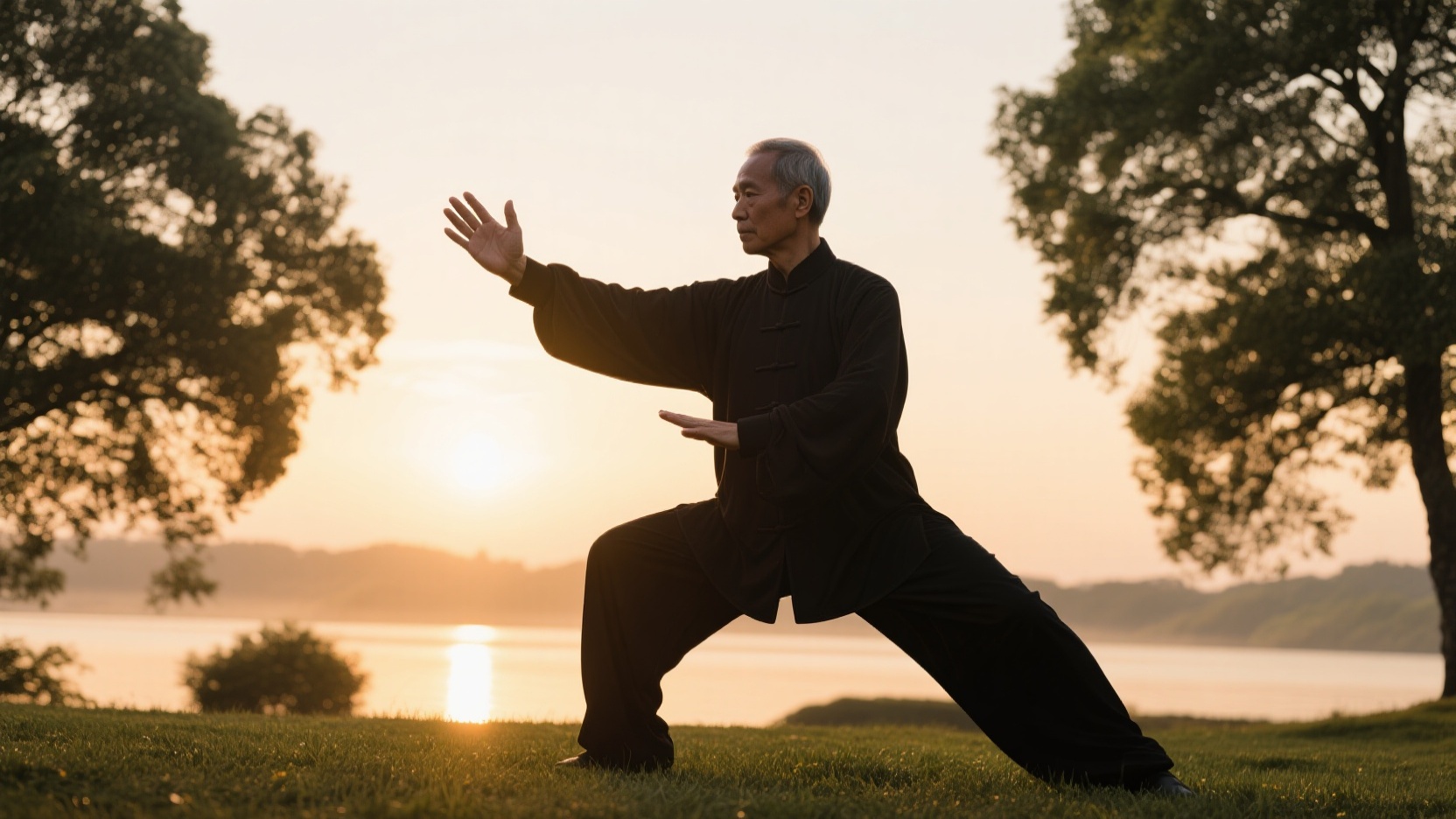
The primary distinction lies in their speed, martial application, and cultivation focus. Yang Style is generally characterized by its high stance and graceful movements. Chen Style is often defined by its coiling energy, explosive power, and lower postures. We will now explore the foundational principles that define these two most popular Tai Chi styles.
I. Core Principles and Energetic Focus
The essence of any Tai Chi practice lies in managing internal energy (Qi) and body mechanics. Yang and Chen styles approach this management differently, rooted in their historical evolution and intended purpose.
Yang Style: Cultivating the Great Frame and Posture
Developed primarily by Yang Lu-chan, the modern Yang style emphasizes health, longevity, and meditation in movement. It focuses on the "Great Frame" (Da Jia). This means expansive, slow, and deliberately uniform movements. The pace allows practitioners ample time for Tai Chi posture correction, ensuring perfect alignment from the crown of the head to the soles of the feet.
- Focus on Central Equilibrium: Yang style practitioners seek deep stillness and relaxation (Song). This ensures the body's center, the Dantian (Elixir Field), is fully activated.
- High Stance & Fluidity: The movements are often performed with a relatively higher stance. This protects the knees and makes it an excellent choice for individuals prioritizing Tai Chi knee protection or those with joint concerns.
- Spiritual & Health Emphasis: The primary goal is regulating the body’s Jing (Essence), Qi (Vitality), and Shen (Spirit) for ultimate wellness.
Chen Style: Silk Reeling and Explosive Power
Chen style is the oldest recognized form of Tai Chi, originating in Chenjiagou. It is inherently martial and dynamic. Its signature characteristic is Chan Si Gong (Silk Reeling Energy). This involves spiral and coiling movements that wrap and unwrap every joint and muscle.
- Martial Intensity: Movements shift rapidly between slow, soft segments and sudden, explosive bursts known as Fajing (Releasing Power).
- Lower Stances: Chen style requires much lower postures and more dynamic twisting. This builds significant leg strength, though beginners must be mindful to avoid unnecessary strain.
- Integration of Hard and Soft: Unlike the uniformly soft Yang style, Chen style constantly integrates Yin (soft) and Yang (hard) within a single movement.
II. Technique, Stance, and Practical Application
The most visible differences between the two styles are seen in their physical execution—the techniques used, the depth of the stance, and how they utilize weight transfer.
Stance Depth and Weight Distribution
In Yang style, the focus on improve balance is achieved through gradual, smooth weight shifts. The practitioner usually keeps the weight 60% on the front foot and 40% on the back, or fully shifts to 100% on one leg for single-weighted posture training. This controlled shift minimizes stress on the lower body and makes it easier for the beginner to learn Tai Chi posture correction.
Chen style uses more extreme shifts and deeper, lower stances, such as the Gong Bu (Bow Stance). This depth necessitates strong foundational leg conditioning. The rapid spiraling often places unique demands on the ankles and knees, requiring careful instruction to ensure proper technique and Tai Chi knee protection.
The Role of Fajing (Explosive Power)
Fajing is a hallmark of Chen style. These sudden releases of power are generated through the coordinated whipping action of the torso, spine, and limbs. It demonstrates the style’s martial roots. In traditional Yang style, Fajing is often absent entirely, or only taught at very advanced levels, emphasizing continuous, uninterrupted flow instead.
If you are finding the subtle differences between these Tai Chi styles overwhelming or are concerned about developing improper habits, seeking systematic guidance is essential. Mastering the foundational principles of centering and alignment from the start will ensure longevity in your practice and prevent injuries.
Learn the precise mechanics taught by Master practitioners today. Gain the deep confidence that comes from perfecting your form. Click here to begin your training in Tai Chi.
III. Which Tai Chi Style is Right for You?
The choice between Yang and Chen ultimately depends on your primary motivation for starting Tai Chi. Both Tai Chi styles offer tremendous benefits, but their paths diverge.
When to Choose Yang Style:
- Primary Goal: Health, stress reduction, mindful movement, and improve balance.
- Physical Condition: You have existing joint issues, or you are new to complex physical training.
- Learning Style: You prefer slow, detailed movements that allow maximum time for introspection and Tai Chi posture correction.
When to Choose Chen Style:
- Primary Goal: Martial training, advanced internal power development, and intense physical conditioning.
- Physical Condition: You are physically robust and looking for a challenging workout that includes dynamic movements.
- Learning Style: You enjoy complexity, shifting speeds, and the integration of martial application (push hands).
Regardless of the style, the principles of proper grounding, relaxation, and integrated movement remain central. Tai Chi for beginners should always start with a deep commitment to learning the correct foundational techniques. This ensures the practice serves as a long-term source of wellness, spiritual refinement, and profound physical strength.
Conclusion: Finding Your Path to Mastery
The distinction between the Yang Style's emphasis on meditative flow and longevity and the Chen Style's spiral power and martial intensity offers a rich spectrum of choice. Both paths lead to profound internal development. By understanding these core differences, you can make an informed decision that honors your body and speeds your progress toward true mastery.
Don't waste months struggling with fragmented videos or self-taught mistakes that compromise your joints. Access a comprehensive, step-by-step curriculum designed to build your skills safely, from basic stances to advanced sequences, ensuring perfect posture correction and lifelong Tai Chi knee protection.