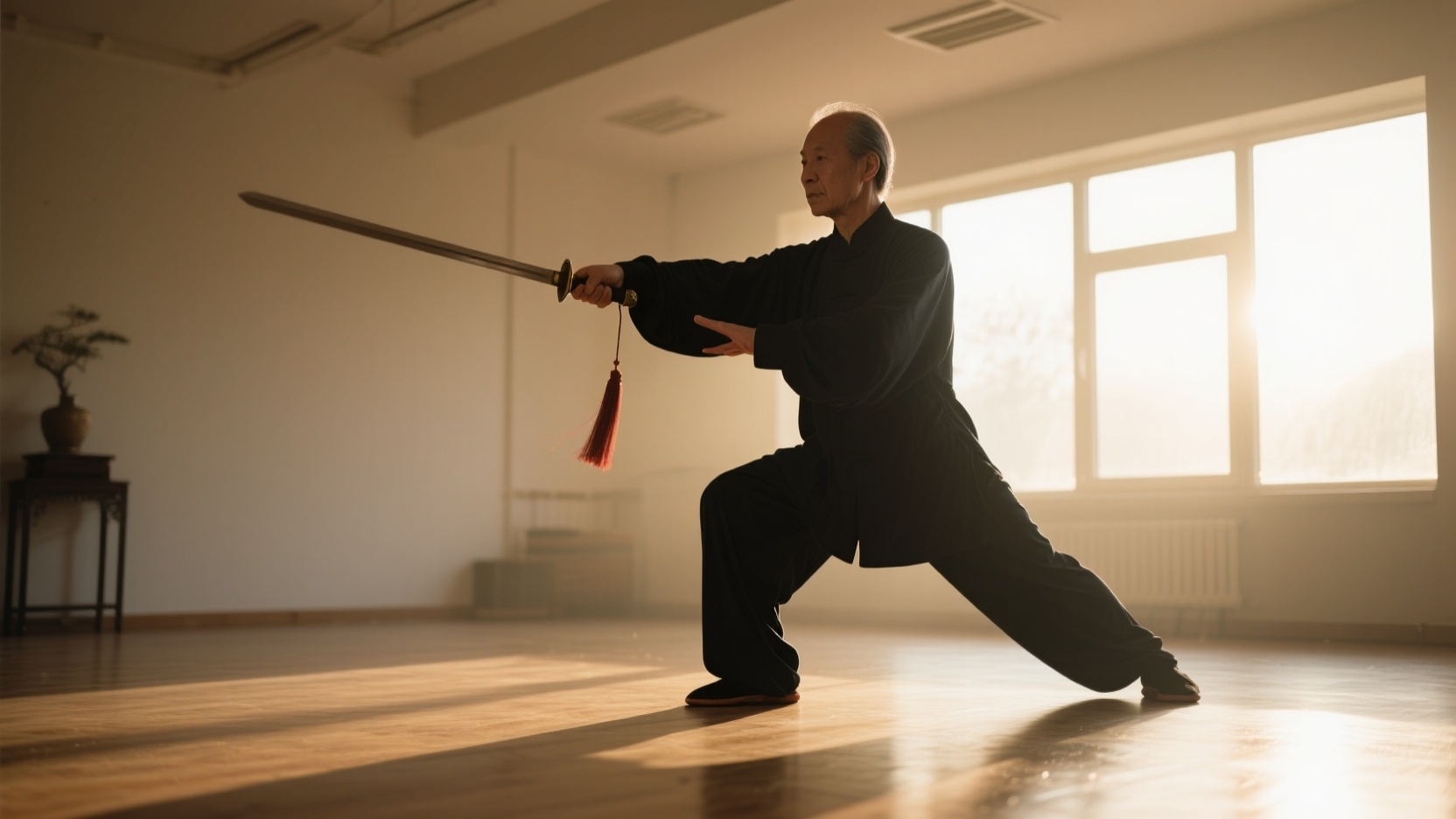
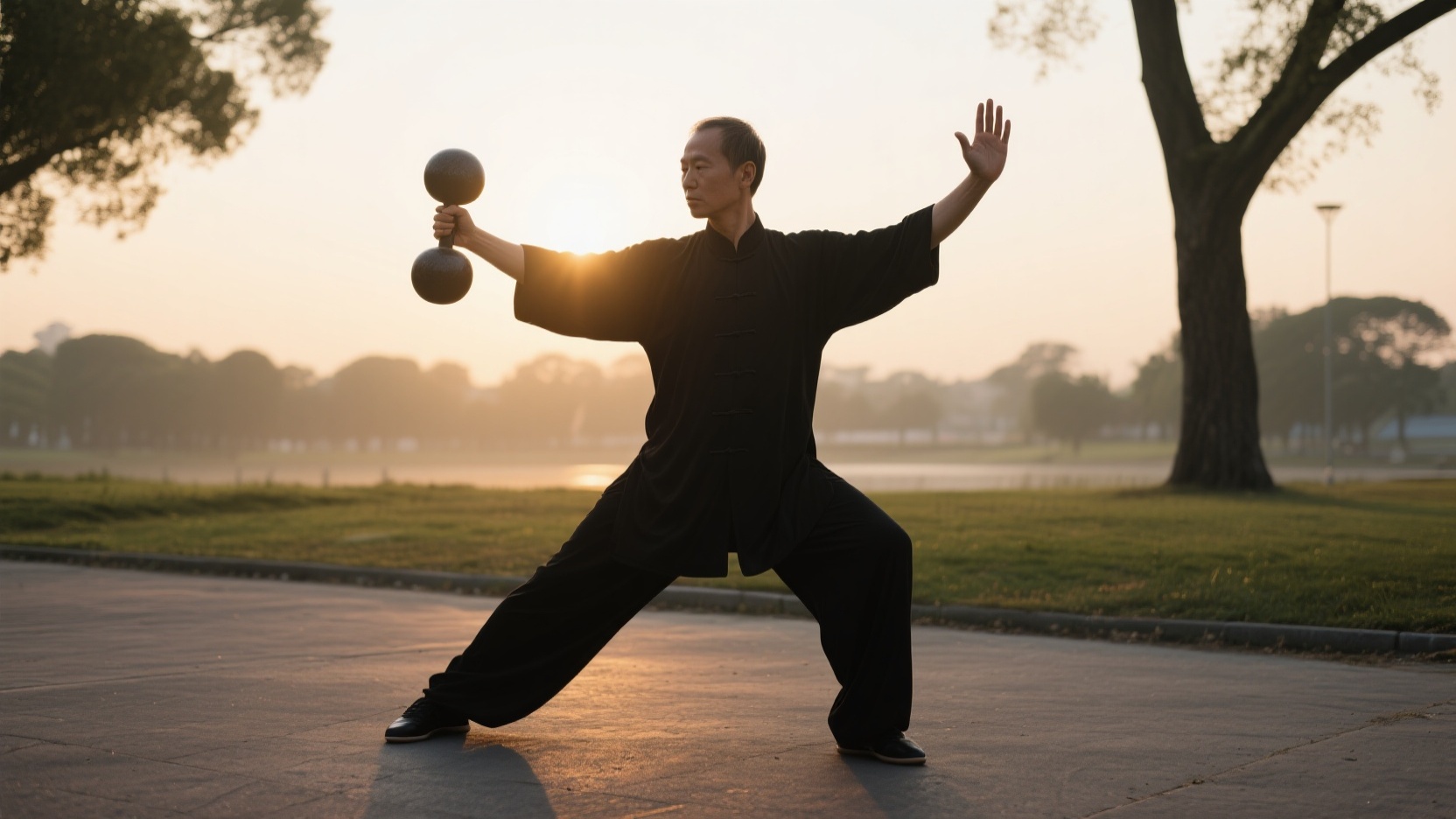
Tai Chi Beginner: 3 crucial steps to correctly learn the foundational movement "Grasp the Sparrow’s Tail."
Many newcomers struggle with Grasp the Sparrow’s Tail—the cornerstone of nearly all major Tai Chi styles. Learning this movement correctly is the defining moment for any Tai Chi beginner. Poor instruction or self-correction often leads to long-term issues like improper weight distribution, which compromises joint safety and undermines the core benefits of the practice. This article provides the authoritative methodology for precise Tai Chi posture correction. We will break down this essential sequence into three crucial, biomechanically sound steps. Mastering this one movement guarantees significant improve balance and prevents the common mistakes that plague self-taught students.
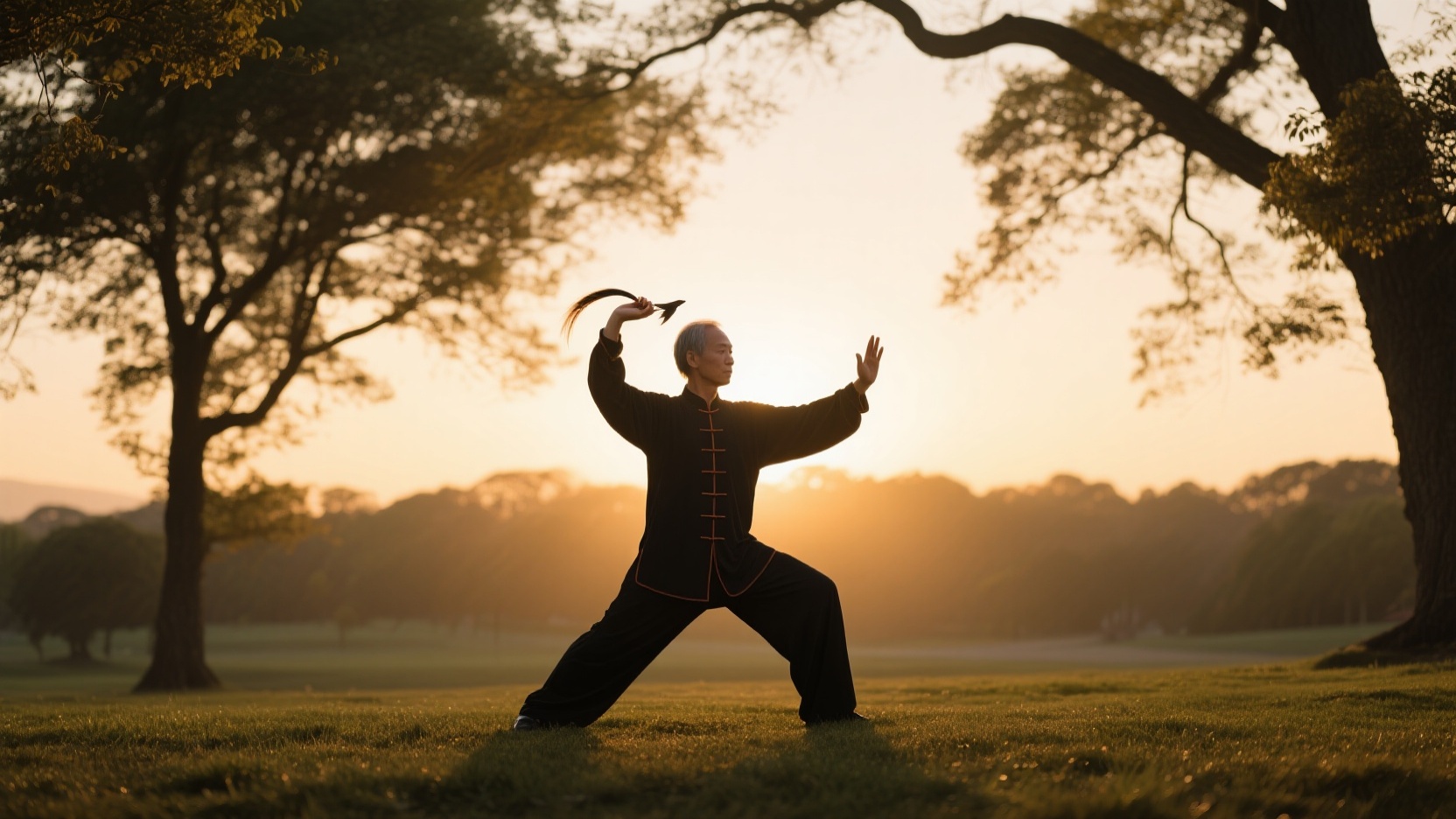
Step 1: Establishing the Internal Root (The Dantian Connection)
Before initiating any movement, you must correctly root the stance. The central principle of Grasp the Sparrow's Tail is connection to the Dantian (Elixir Field, the body's energetic center). The Dantian is located approximately two inches below the navel. Proper sinking and alignment ensure Qi (vital energy) flows smoothly through the torso.
The Principle of Open Kua and Empty Step
The Kua (hip crease) must remain relaxed and open throughout the transition. This allows the weight to settle deeply into the supporting leg. Beginners must prioritize the "empty step." This means 70% of the body’s mass remains on the back leg until the transition phase is complete. This careful distribution prevents rushing the movement. It also ensures the spine maintains its natural vertical alignment. This internal focus is foundational for long-term power generation and structural integrity.
Step 2: Precision in Weight Shift and Tai Chi Knee Protection
This phase is where most practitioners introduce dangerous errors. Improper weight shifting invariably leads to severe Tai Chi knee protection issues. As you shift weight forward, the knee should never track past the plane of the toe. This requirement is non-negotiable for joint longevity.
Biomechanics of the Forward Transition
The torso must remain upright and balanced directly over the Yongquan (Bubbling Spring point on the foot’s arch). To protect the ligaments, focus on rotating the hip and opening the Kua *before* rotating the knee. The true source of power comes from the Jing (raw, physical power) generated from the ground and channeled upward through the legs and waist. A common error is initiating movement from the periphery (hands or shoulders). Consistent Tai Chi posture correction requires integrating the waist as the primary driver of all motion.
If you find self-correcting these subtle internal alignments challenging, relying on self-taught methods can solidify poor habits that take years to undo. Stop guessing and start learning Tai Chi systematically from Master-level guidance. Enroll today to ensure every foundational movement is perfect: Tai Chi
Step 3: Synchronizing the Four Energies for Perfect Balance
“Grasp the Sparrow’s Tail” is not a single movement; it is a synthesis of four primary Tai Chi energies. Achieving perfect improve balance requires harmonizing these components seamlessly.
Integrating Peng, Lu, Ji, and An
The four energies are: Peng (Ward Off), Lu (Roll Back), Ji (Press), and An (Push).
- Peng (Ward Off): Establishes the expansive, elastic frame. The arms maintain an outward buoyant force.
- Lu (Roll Back): Redirects the opponent’s incoming force inward and downward, requiring yielding stability.
- Ji (Press): Brings the energy inward toward the centerline before pressing forward and outward.
- An (Push): Completes the movement by stabilizing the forward pressure, sinking the weight back slightly to maintain root.
Practice linking these four energies seamlessly. The movement of the hands must be perfectly coordinated with the rotation of the waist (Dantian). This integration of external form and internal structure is the final key to mastering the sequence and unlocking true internal stability.
Mastering "Grasp the Sparrow’s Tail" transcends mere physical repetition. It is about aligning your internal Dantian, ensuring precise weight distribution for Tai Chi knee protection, and integrating the four core energies. This level of detail guarantees long-term health benefits and genuine proficiency, separating the novice from the dedicated practitioner.
Don't waste time struggling with videos or inaccurate self-correction. Our complete Tai Chi course provides the structured guidance, detailed posture breakdowns, and progressive lessons needed to achieve Master-level precision from day one. Invest in correct foundation and accelerate your journey toward genuine Daoist wellness.