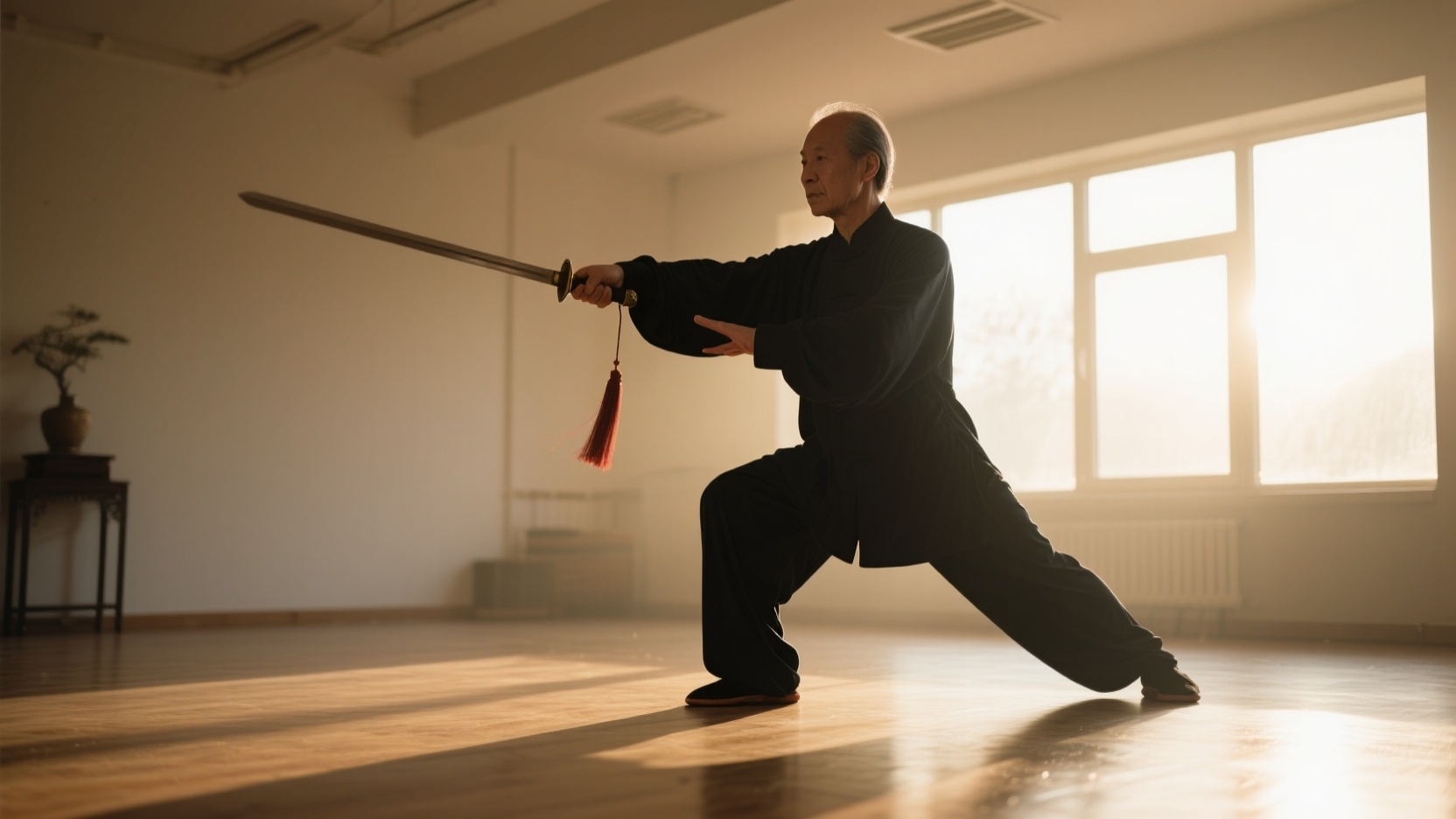
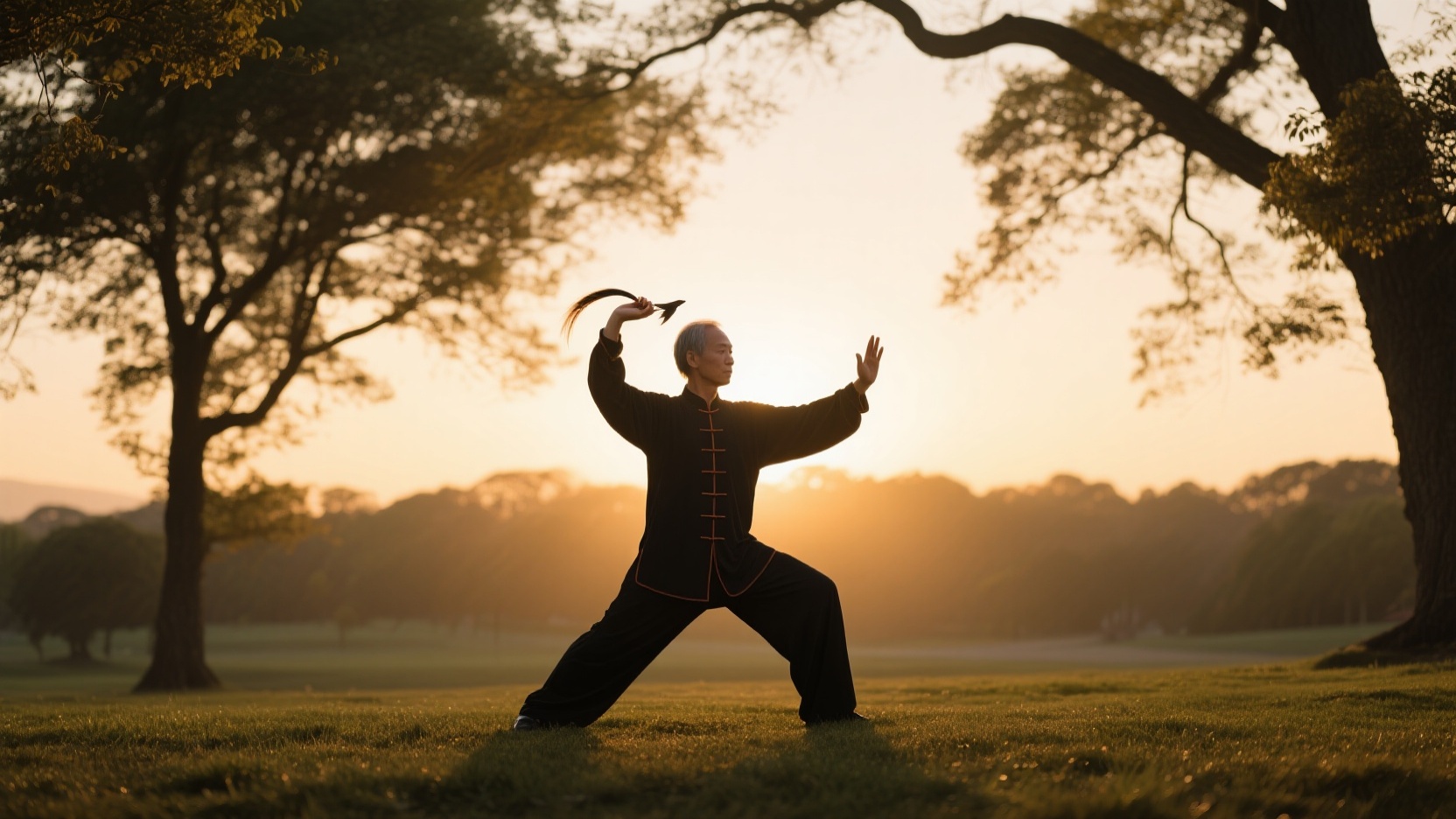
How to protect the knee joints using the "Separating Solid and Empty" principle in Tai Chi.
Knee pain is the single most common reason practitioners abandon the practice of Tai Chi (Taiji quan). While this elegant internal martial art is renowned globally for its low-impact nature, improper weight distribution—especially among Tai Chi for beginners—can lead to chronic, debilitating strain. This happens when practitioners fail to master the fundamental biomechanical principle known as "Separating Solid and Empty" (Fen Xu Shi). Mastery of this principle is not just key for proper Tai Chi knee protection; it is the cornerstone of effective movement and necessary for significant improvements in stability and balance. Understanding how to shift weight with precision will eliminate damaging lateral pressure on the joints, ensuring your practice enhances, rather than hurts, your longevity.
The Foundational Principle: Fen Xu Shi (Separating Solid and Empty)
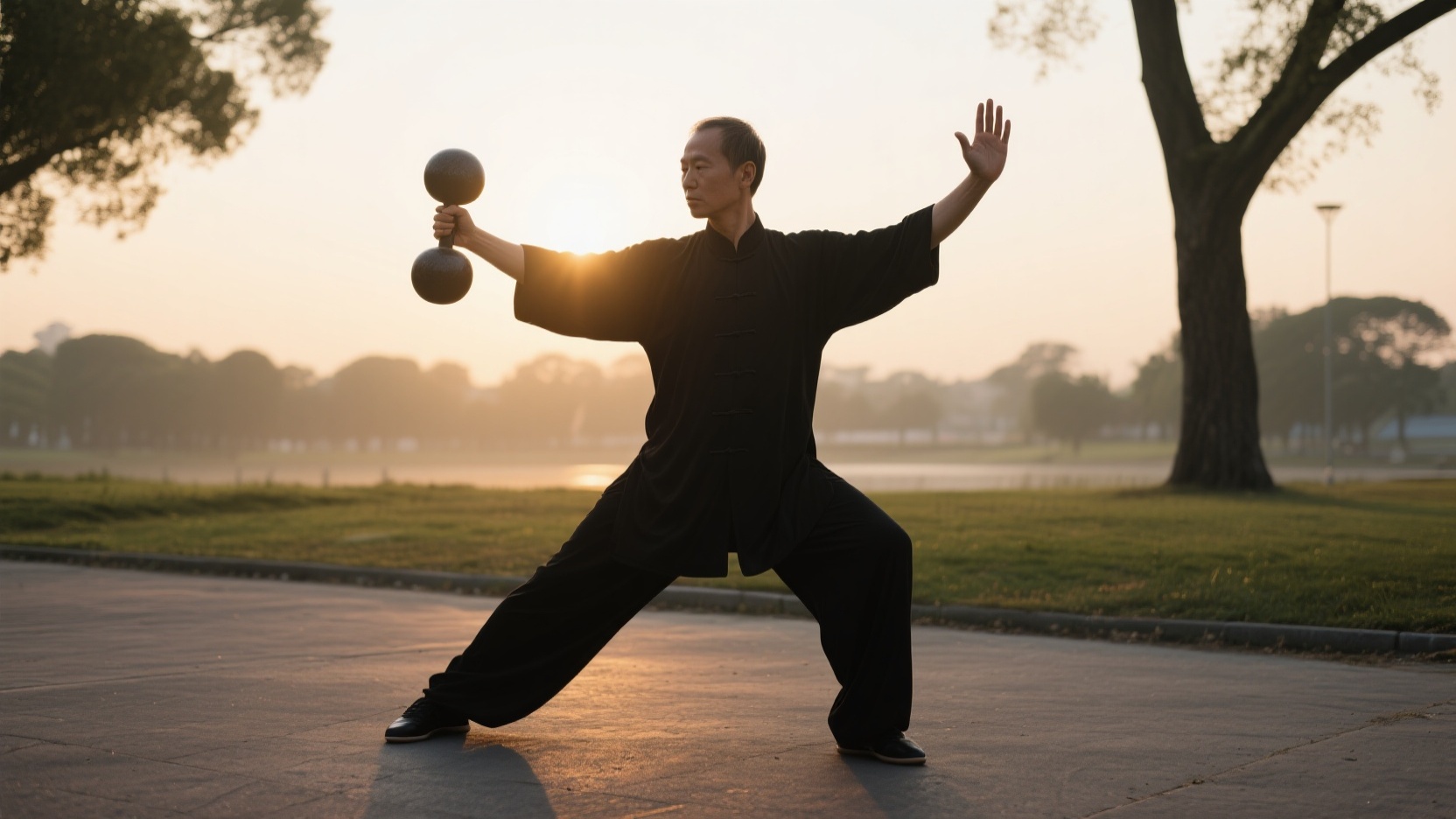
Fen Xu Shi dictates that at any given moment, one leg must be designated as “Solid” (Shi) and the other as “Empty” (Xu). The Solid leg bears the vast majority of your body weight. The Empty leg should carry only a minimal amount, usually 10–20%, or sometimes none at all. This strict separation allows for controlled movement, stability, and mobility simultaneously. The goal is to move the Qi (Vital Energy) and Jing (Essence) fluidly without disrupting the physical structure.
Understanding Solid (Shi) and Empty (Xu)
- Solid (Shi): This is the pillar. It is rooted and fully engaged. The leg is subtly bent, and the weight is focused downward, anchoring the body.
- Empty (Xu): This is the mobile, yielding leg. It remains light and flexible. Because it bears little weight, it is free to step, turn, or adjust posture without unnecessary friction or twisting torque.
In various Tai Chi styles, especially those involving deep squats, failing to clearly define Shi and Xu causes the infamous “double-weighted” stance. A double-weighted stance means both legs are attempting to bear equal weight. This locks the Kua (Hip/Pelvic Joint) and forces the knees to absorb destructive lateral shearing forces during transitions.
Applying Solid and Empty: The Foundation of Tai Chi Knee Protection
Effective Tai Chi knee protection relies entirely on controlled, vertical weight transfer. The movement must originate from the Dantian (Elixir Field) and the hips, not the knees. This systematic approach ensures the knee stays aligned over the ankle, minimizing strain.
3 Critical Steps for Safe Weight Transfer
To safely execute weight shifts, focus on initiating the transition from the center line:
- Rooting the Solid Leg: Before moving, ensure your weight is 100% committed to the Solid leg. Relax the hip (Kua) of the Solid side, allowing the weight to sink deep into the foot.
- Clearing the Empty Leg: Once the Solid leg is fully committed, the opposite leg becomes completely Empty. Use this freedom to reposition the Empty foot lightly. Never initiate the step until the leg is cleared of weight.
- Controlled Transition: When transferring weight into the new foot, shift slowly, as if pouring water from one vessel to another. This is where precise Tai Chi posture correction prevents knee injury. Your body’s center line should travel directly over the center of the supporting foot during the transfer.
While theoretical knowledge is crucial, applying the principles of Fen Xu Shi in practice requires detailed, systematic instruction. Many common mistakes in Tai Chi for beginners—such as collapsing the back knee or letting the front knee track inward—are hard to fix without guided feedback.
If you are struggling to master precise weight distribution and fear long-term joint damage from self-taught mistakes, a structured curriculum is essential. Achieve the Master-level precision that truly safeguards your body by enrolling in our expert program today: Tai Chi
Advanced Techniques for Improved Balance and Posture Correction
Once the basic separation of Solid and Empty is achieved, practitioners can focus on using this principle to dramatically improve balance and stability. This involves utilizing the ground reaction forces correctly and integrating the entire body structure.
The Role of the Kua (Hip Joint) and Wei Lu (Tailbone)
The knees are merely connectors; they should not be the primary mechanism for absorbing force or generating movement. True stability comes from the Kua (Hip/Pelvic Joint). When you shift weight, the hips must unlock and guide the movement. Tucking the Wei Lu (Tailbone) slightly downwards helps align the spine and pelvis, directing the force vertically into the earth. If the Kua is stiff or locked, the knee is forced to rotate unnaturally, inevitably leading to injury.
Using Fen Xu Shi to Improve Balance
Effective use of Solid and Empty transforms the ability to improve balance. When one leg is truly Empty, the body can adapt quickly to external forces. This capacity for instantaneous adjustment is why advanced practitioners of various Tai Chi styles appear so effortless and stable. This level of responsiveness is only possible when the standing leg is truly rooted and the moving leg is truly free.
- Check for Rooting: Practice standing solely on the Solid leg. If you wobble or feel unstable, the shift was incomplete.
- Check for Emptiness: On the Empty side, ensure you can lift the heel or even the entire foot without shifting your center of gravity on the Solid leg.
Conclusion
Protecting your knees in Tai Chi is not about padding or bracing; it is about perfect internal mechanics. The principle of “Separating Solid and Empty” (Fen Xu Shi) provides the architectural blueprint for safe, powerful, and fluid movement. By diligently practicing proper rooting and controlled weight transfer guided by the Dantian, you ensure that every Tai Chi posture correction you make contributes to long-term health and vitality, rather than degeneration.
Do not let common beginner mistakes threaten your long-term practice. Stop guessing if your stance is correct or if your weight shift is harming your joints. Our comprehensive, step-by-step video curriculum provides the detailed instructions and biomechanical analysis necessary to master Fen Xu Shi from day one, transforming your posture and protecting your knees with Master-level precision.