How to determine if my Tai Chi instructor is a genuine Master?
Determining whether your Tai Chi instructor is a genuine master can be challenging, especially if you are new to the art. While appearances, titles, and certificates can be misleading, there are practical signs you can look for in your teacher’s skill, behavior, and teaching methods. This guide outlines clear, grounded criteria to help you make an informed judgment over time, not just after one class.
1. Understand What “Master” Really Means
Before judging your Tai Chi instructor, it helps to clarify what “master” actually means. In traditional Chinese martial arts, “master” is not a formal, universal rank like a black belt in some other systems. Different schools and cultures may use terms like sifu, shifu, laoshi, or master with different standards.
- Skill level: A master-level practitioner has deep, refined skill in forms, internal principles, and applications.
- Understanding: They can explain not only how to move, but why, and how principles connect across techniques.
- Embodiment: Their body mechanics, posture, and presence show Tai Chi principles even in everyday movement.
- Character: Traditionally, a true master is also measured by integrity, humility, and care for students.
In modern times, the word “master” is often used in marketing. So instead of being impressed by the title, focus on observable qualities.
2. Observe Their Body Mechanics and Movement Quality
Even as a beginner, you can notice certain physical signs that distinguish a skilled practitioner from someone only imitating movements.
2.1 Posture and Alignment
- Back is naturally upright, not stiff or overly arched.
- Shoulders and chest are relaxed, not lifted or collapsed.
- Knees are aligned with the toes; no obvious twisting or collapsing inward.
- Head is balanced as if gently suspended, not thrust forward.
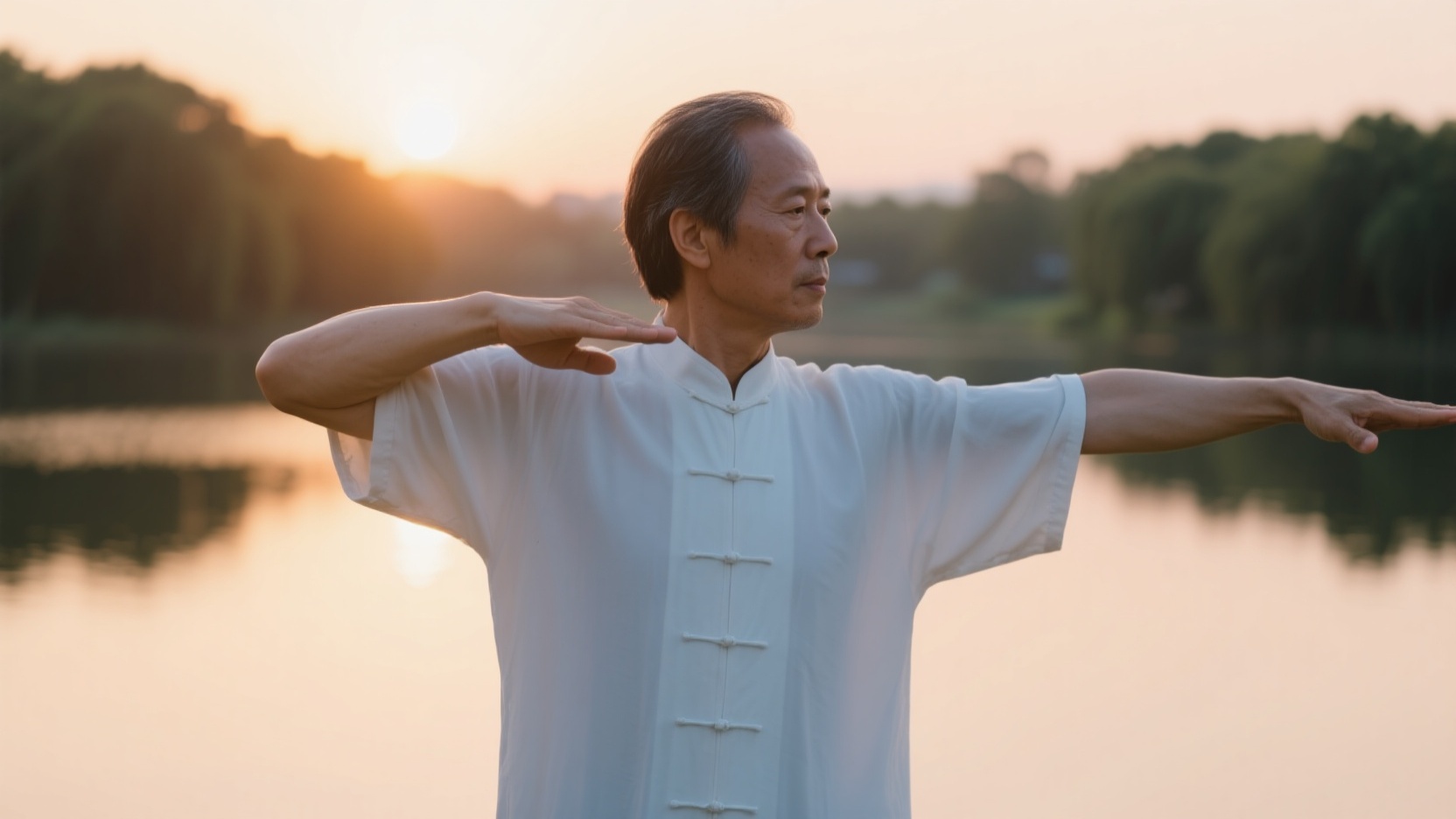
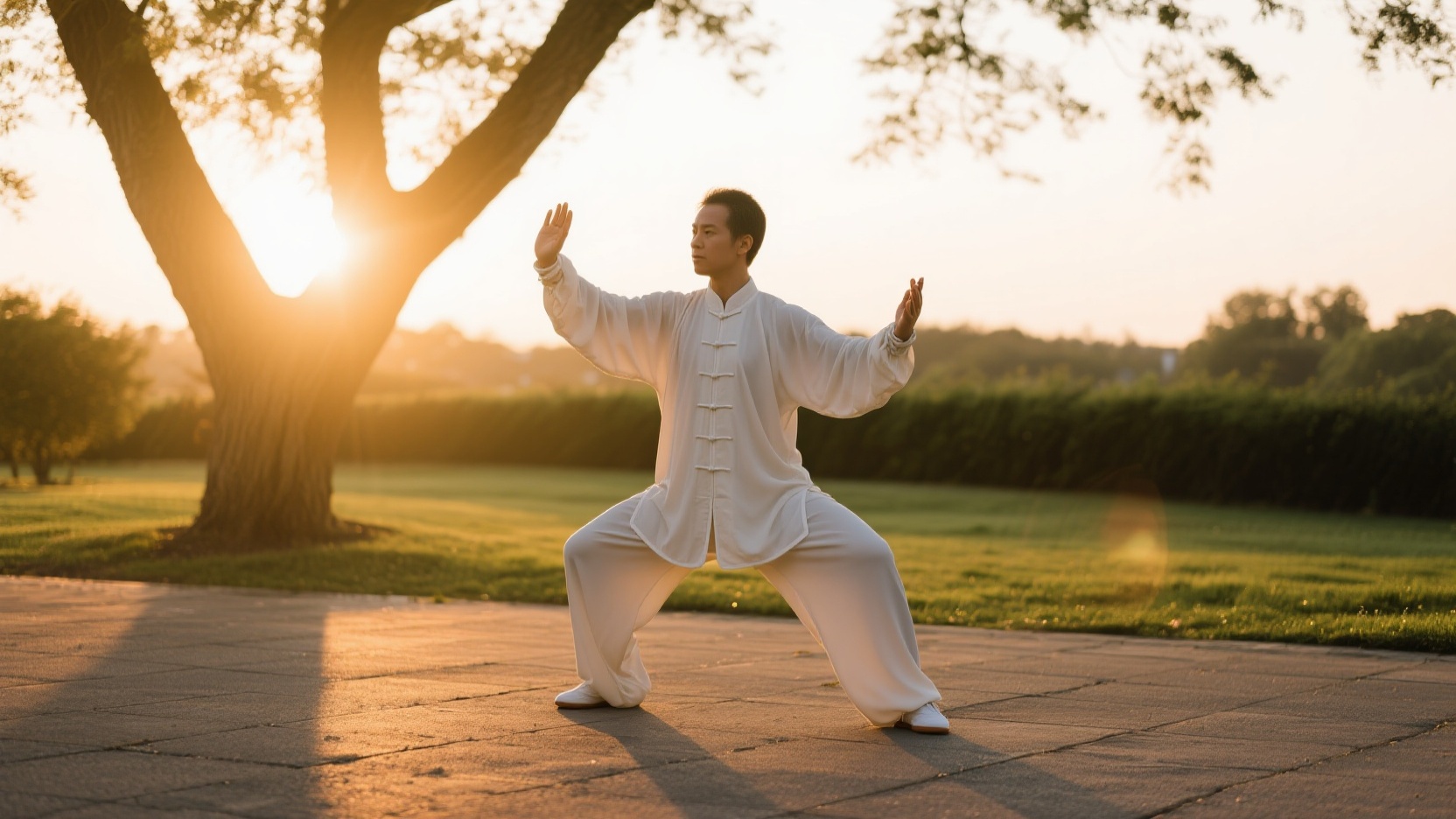
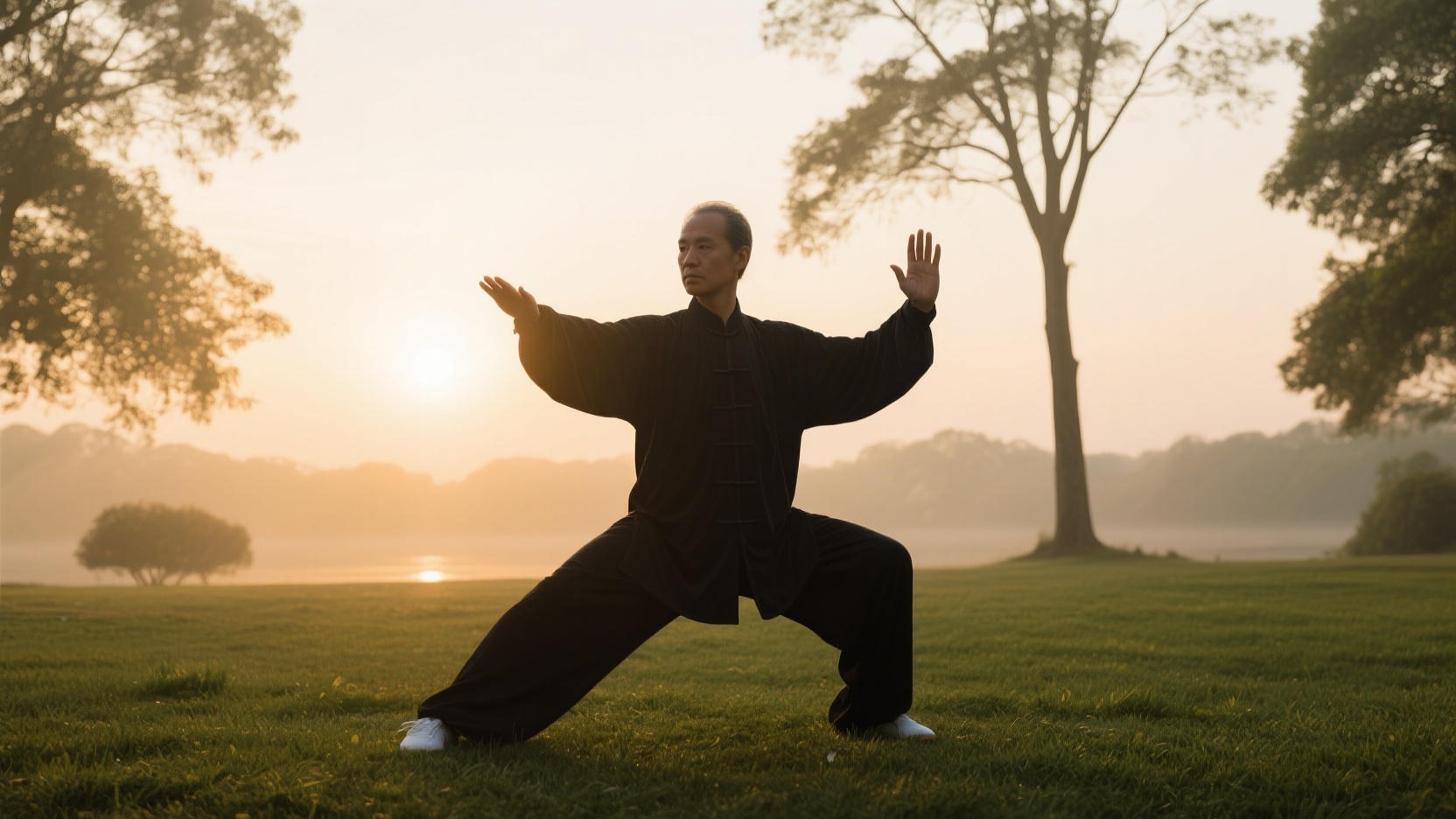
A genuine master’s posture looks effortless, stable, and comfortable. There is no visible strain or exaggeration.
2.2 Relaxation with Structure
High-level Tai Chi is not limp or floppy. It combines relaxation (song) with clear structure:
- Movements are smooth and continuous without jerky stops or rushed parts.
- Arms and hands are relaxed yet not collapsed; they feel supported from the whole body.
- The transition from one posture to another looks like water flowing, not like separate disconnected poses.
If your instructor’s form looks tense, forced, or like regular calisthenics, they may lack deeper internal training.
2.3 Root and Balance
“Root” in Tai Chi refers to stable, grounded balance. Signs of good root include:
- They move without wobbling, swaying, or losing balance.
- They can shift weight smoothly between legs without visible effort.
- When demonstrating pushing or being pushed, they appear stable rather than easily toppled.
You may not be able to fully test this as a beginner, but you can observe whether your teacher looks consistently stable and relaxed as they move.
3. Evaluate Their Teaching Style
Teaching skill is as important as personal skill. A genuine master-level instructor not only performs well but also helps students grow safely and effectively.
3.1 Clarity and Structure
- They break movements into clear, manageable steps.
- Lessons follow a logical progression, not random forms each class.
- They repeat key principles, not just choreography.
- They give specific corrections, not only vague praise.
If the class feels chaotic, confusing, or like you are always “following along” without understanding, the teaching level may be limited.
3.2 Ability to Teach Different Levels
A genuine master adapts instruction to who is in front of them:
- Beginners get foundational postures, relaxation, and simple principles.
- Intermediate students get more detail on structure, breath, and internal connections.
- Advanced students are challenged with applications, push hands, or deeper theory.
If everyone gets exactly the same generic routine regardless of age, ability, or experience, this may indicate a more superficial approach.
3.3 Patience and Safety
- They encourage you to respect your limits and avoid pain or strain.
- They correct dangerous alignment, especially for knees, lower back, and neck.
- They answer questions without irritation or ridicule.
- They would rather you move correctly and slowly than sloppily and fast.
An instructor who pushes you to do painful or extreme movements, or dismisses safety concerns, is not demonstrating the ethics associated with true mastery.
4. Look at How They Handle Applications and Push Hands
Tai Chi is not only a health exercise; it is also a martial art. While not every class is combat-focused, a genuine master should understand and demonstrate the art’s practical side at some level.
4.1 Understanding of Applications
Ask (at a suitable time) how certain movements could be used in self-defense or partner practice. A skilled teacher can:
- Demonstrate how a form movement could be used to neutralize or redirect force.
- Show variations of an application, not just one memorized trick.
- Explain principles like yielding, sticking, and redirecting, not only “punch and block.”
If they cannot show any coherent application or give only vague answers, their understanding may be shallow.
4.2 Quality of Push Hands (If Offered)
Push hands (tui shou) is a partner exercise that trains sensitivity, rooting, and relaxation under pressure. In a genuine master’s hands, push hands should look:
- Relaxed but responsive, not stiff or wrestling-like.
- Cooperative for beginners, becoming more challenging as skill increases.
- Safe—students do not get slammed, yanked, or humiliated.
Be cautious if “push hands” in your school is basically shoving matches, ego contests, or theatrical demonstrations where students seem to fly away on light touches with exaggerated reactions.
5. Check Their Lineage and Training Background
Lineage is not everything, but it does matter. A genuine master typically has:
- A clear teacher or teachers they trained with for many years.
- A connection to a recognized Tai Chi style (Chen, Yang, Wu, Wu/Hao, Sun, etc.).
- Training history that makes chronological sense (years of study, not a short weekend certification).
5.1 How to Ask About Lineage
You can respectfully ask questions such as:
- “Who did you study with, and for how long?”
- “Which style or lineage do you teach?”
- “Do you still have a teacher or visit your teacher’s school?”
A genuine teacher should be able to answer without getting defensive. If they feel insulted, change the subject, or give very vague answers, consider this a potential red flag.
5.2 Certificates and Titles
Certificates can be genuine, but they are easy to fake or buy. Instead of being blinded by walls of framed diplomas, look for:
- Consistency between their claimed background and their actual skill.
- Recognition by respected organizations or teachers, not just unknown “international” bodies.
- Evidence of ongoing learning—seminars, exchanges, or visits to their own teachers.
Titles like “Grandmaster,” “Supreme Ultimate Master,” or many flashy ranks are often used as marketing more than as real indicators of ability.
6. Assess Their Character and Ethics
In traditional culture, martial arts mastery includes moral character. You can observe this over time in how your instructor behaves inside and outside class.
6.1 Humility and Openness
- They acknowledge that they are still learning and that no one art is perfect.
- They do not constantly criticize other teachers or styles.
- They can say “I don’t know” when appropriate.
Boastful claims like “I am the best in the country” or “No one can touch my skill” are warning signs.
6.2 Respect for Students
- They do not insult, belittle, or shame students.
- They maintain appropriate physical and emotional boundaries.
- They do not pressure students into financial commitments, loyalty oaths, or personal favors.
Any kind of manipulation, bullying, or cult-like behavior is not compatible with true mastery, no matter how skilled someone appears.
6.3 Transparent Business Practices
- Class fees and policies are clear and reasonable for your area.
- There are no constant surprise fees for “secret” levels or special titles.
- Students are free to visit other schools or seminars without punishment.
If your instructor uses fear, guilt, or secrecy to control students, that is a strong sign to reconsider training there.
7. Observe the Learning Environment and Community
The quality of the community around a teacher often reflects their character and teaching ability.
- Do long-term students move well, improve over time, and seem healthy?
- Is the atmosphere supportive and focused, or tense and competitive?
- Are beginners welcomed and helped, or ignored and left behind?
- Do students speak positively about the teacher, without signs of fear or idol worship?
A genuine master tends to attract sincere practitioners and build a stable, respectful community, even if it is small.
8. Trust Your Direct Experience, Not Just Stories
Stories of miracles, no-touch knockdowns, and supernatural powers are common in martial arts folklore. While Tai Chi includes subtle internal skills, you should base your judgment on what you can directly experience.
- Do you feel calmer, more balanced, and more aware after class over weeks and months?
- Does your body feel better—joints, posture, breathing—or are you often in pain or confused?
- When you practice with your instructor or advanced students, do their skills feel real and functional?
Your own steady, honest experience is a more reliable guide than dramatic demonstrations designed to impress spectators.
9. Red Flags to Watch For
While no teacher is perfect, repeated patterns of the following behaviors strongly suggest you are not dealing with a genuine master:
- Grandiose claims of invincibility or supernatural powers.
- Refusal to let students cross-train or visit other schools.
- Cult-like atmosphere with excessive devotion to the teacher.
- Constant upselling of secret levels, sashes, or titles.
- Unsafe training, frequent injuries, or disregard for medical issues.
- Lack of clear lineage, history, or demonstrable skill.
10. Give It Time and Stay Objective
Determining whether your Tai Chi instructor is a genuine master is not a one-time test; it is an ongoing observation process. Spend a few months training, paying attention to:
- Your own progress in health, relaxation, and understanding.
- The consistency between what your teacher says and what they do.
- How they respond under pressure, criticism, or challenging questions.
Over time, patterns will become clear. You do not need to judge your teacher harshly, but you do have the right to choose an instructor who is skilled, ethical, and aligned with your goals.
Conclusion: Choosing the Right Tai Chi Guide
A genuine Tai Chi master is not defined by fancy titles, exotic outfits, or dramatic stories. They are known by their embodied skill, clear and patient teaching, ethical behavior, and the real progress of their students. By observing their movement, lineage, character, and the learning environment, you can make a grounded decision about whether this is the right teacher for you.
Ultimately, the most important step is to keep practicing, stay curious, and remember that your own development is the true measure of the path you walk. If your current instructor supports that journey with competence and integrity, you may indeed be learning from a genuine master.